
I've been coming to SXSW for over 15 years. I've watched the festival cycle through every identity: the year of Twitter, Foursquare, Uber, VR, NFTs, AI, and everything in between.
This year, the creator economy fully arrived. With SXSW's Creator Economy track in its third year, it finally felt integrated into both the official programming and the side events across the city.
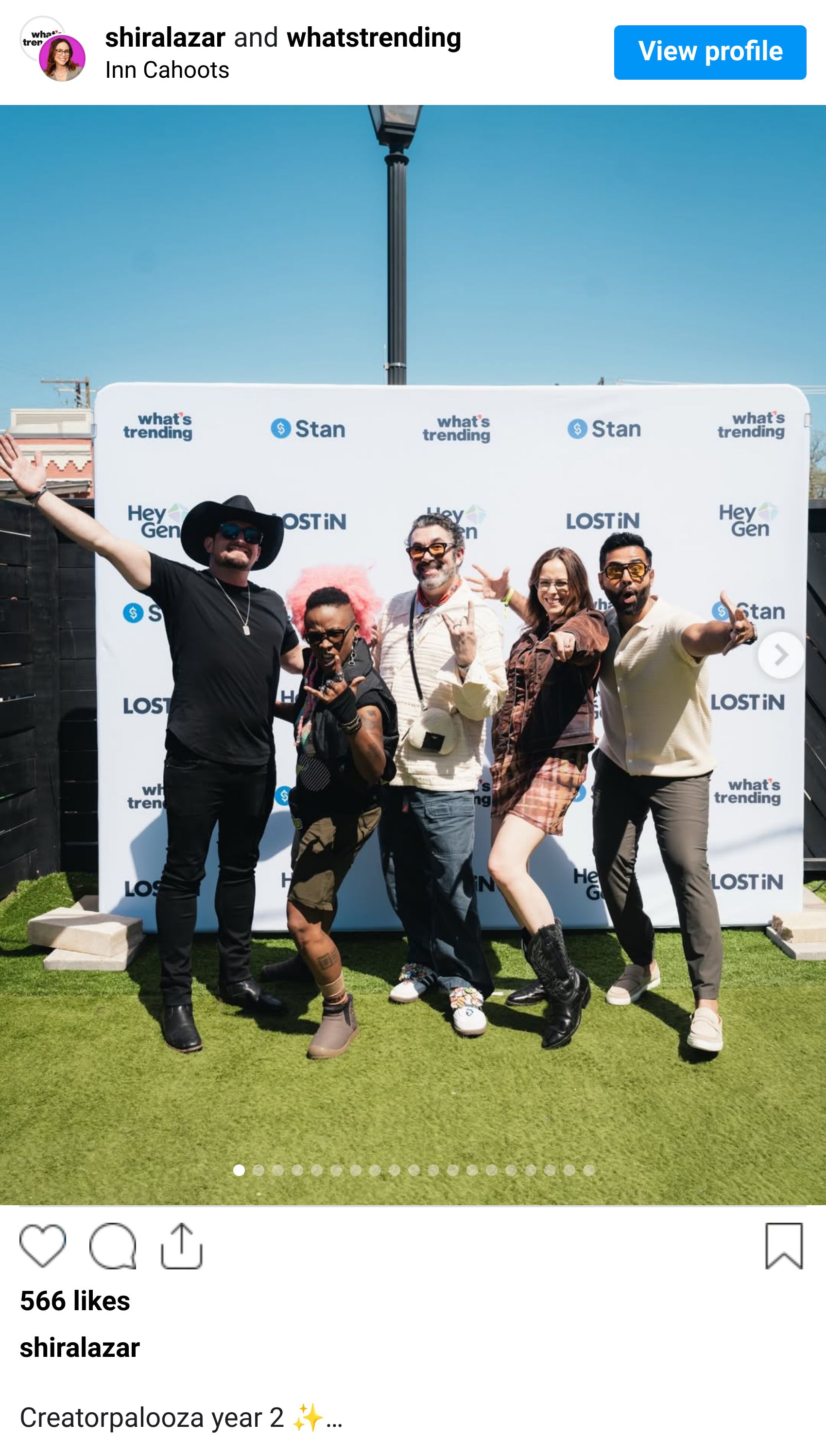
I produced and hosted Creatorpalooza for the second year through What’s Trending and sponsored by HeyGen, Stan, LOSTiN. We covered everything from brand partnerships and trust to AI avatars, LinkedIn monetization, mental health, and podcast growth. But more than our event, the entire week pointed to something bigger.
In past years, SXSW was defined by massive brand takeovers and flashy installations. This year felt different.
Activations were more intimate and intentional. While Spotify hosted podcasts and Manychat had their own block party, many brands leaned into smaller, invite-only dinners and gatherings. Others created hands-on experiences like B&H’s Creator Rodeo. Teachable gave us a sunset cruise while producing original content with attending creators and Beehiiv showed up through fireside chats with CEO Tyler Denk.
The throughline: creators don't just want swag bags and photo ops. They want tools, real conversations, connections, spaces to build and of course make money. The brands that leaned into utility over spectacle won the week.
Across the week, one idea kept surfacing: successful creators are operating like full media companies. Producing shows, launching products, running podcasts, and building deeply engaged communities. For brands, that means a mindset shift. Creators aren’t just distribution. They’re partners. The most effective collaborations are embedded in storytelling, not added on as sponsored posts.
Of course, you couldn't escape AI this year too. Nearly a third of all PanelPicker proposals involved AI. What was once a standalone AI track has expanded into a broader Tech & AI category, sponsored by IBM. Meanwhile, crypto has all but vanished from the program, a stark contrast to the NFT surge of 2022 and Web3 hype of 2023.
The conversation itself has matured. Sessions focused less on hype and more on infrastructure: the future of search, AI agents controlling discovery, data center expansion, and the energy demands behind it all.
For creators, the implications are real. As AI increasingly mediates distribution, owning your audience AND your voice becomes non-negotiable.

No Convention Center, No Problem
With the Austin Convention Center undergoing a $1.6 billion rebuild, SXSW leaned fully into a “city as venue” model. Events were spread across downtown including hotels, pop-ups, and dedicated clubhouses for Innovation, Film & TV, and Music. It made the experience feel less like a conference and more like a discovery process.
One of the biggest themes this year was also the international presence. SXSW has always drawn a global crowd, but the energy was different. It wasn't just about showing up. It was about recruiting, especially given the current climate around jobs and the economy stateside.
The French House (La French Touch) ran panels on AI, XR, and networking backed by Bpifrance and the French Embassy. São Paulo House took over Congress Avenue for four days. There was a German Haus, UK House, Ireland House, plus Czech, Argentina, and Poland houses.
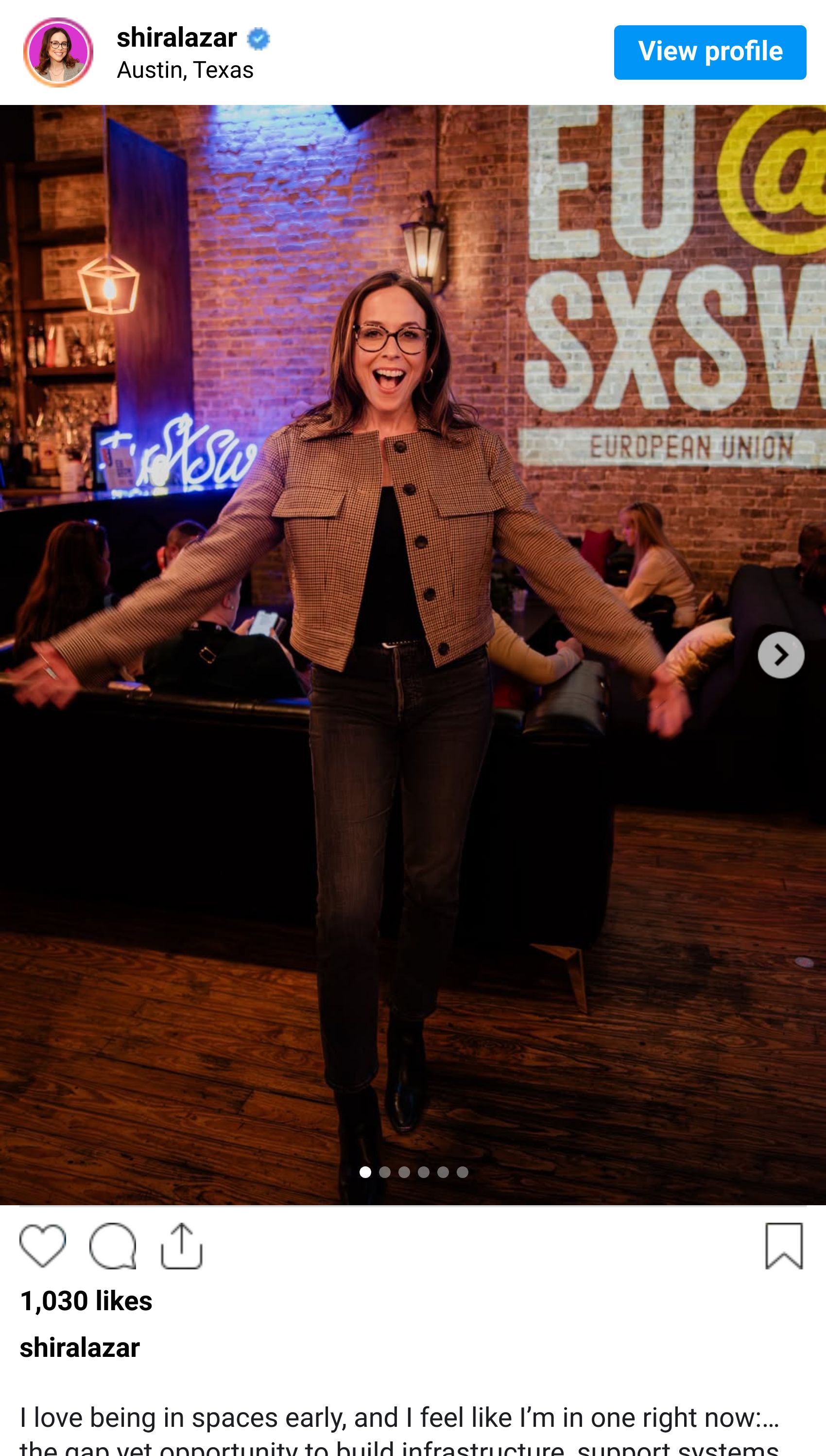
I joined the EU in the US team and their event at the German Haus for a fireside chat with Deputy Head of the EU Delegation in Washington, Ruth Bajada. We discussed the future of digital work and life, from Europe’s AI Act to my work on the Creator Bill of Rights and Creators 4 Mental Health.
The takeaway from SXSW this year is clear: the future belongs to those who own their audience, build real community, and think globally.
Other headlines to check out:
AI
Creator Economy
Web3
Friendly Reminder
Don’t think about the perfect path, think about the progression…
Remember, I'm Bullish on you! With gratitude,

