
In partnership with


with Claire Uhar and Tyler Denk (CEO and Founder of Beehiiv)
The 2026 White House Correspondents' Dinner ended early on Saturday, after a man charged a security checkpoint outside the Hilton ballroom and a Secret Service officer was shot. The shift I want to look at sits underneath all of that, and it has been building for a decade.
The clearest sign of where things are headed came two years ago, in a story most people missed. In 2024, Catherine Valentine, Substack’s Head of News and Politics, reached out to the White House Correspondents’ Association about buying tables for independent journalists. The exchange was first surfaced in a thread by journalist Tara Palmeri and later reported by The Washington Post creator economy newsletter.

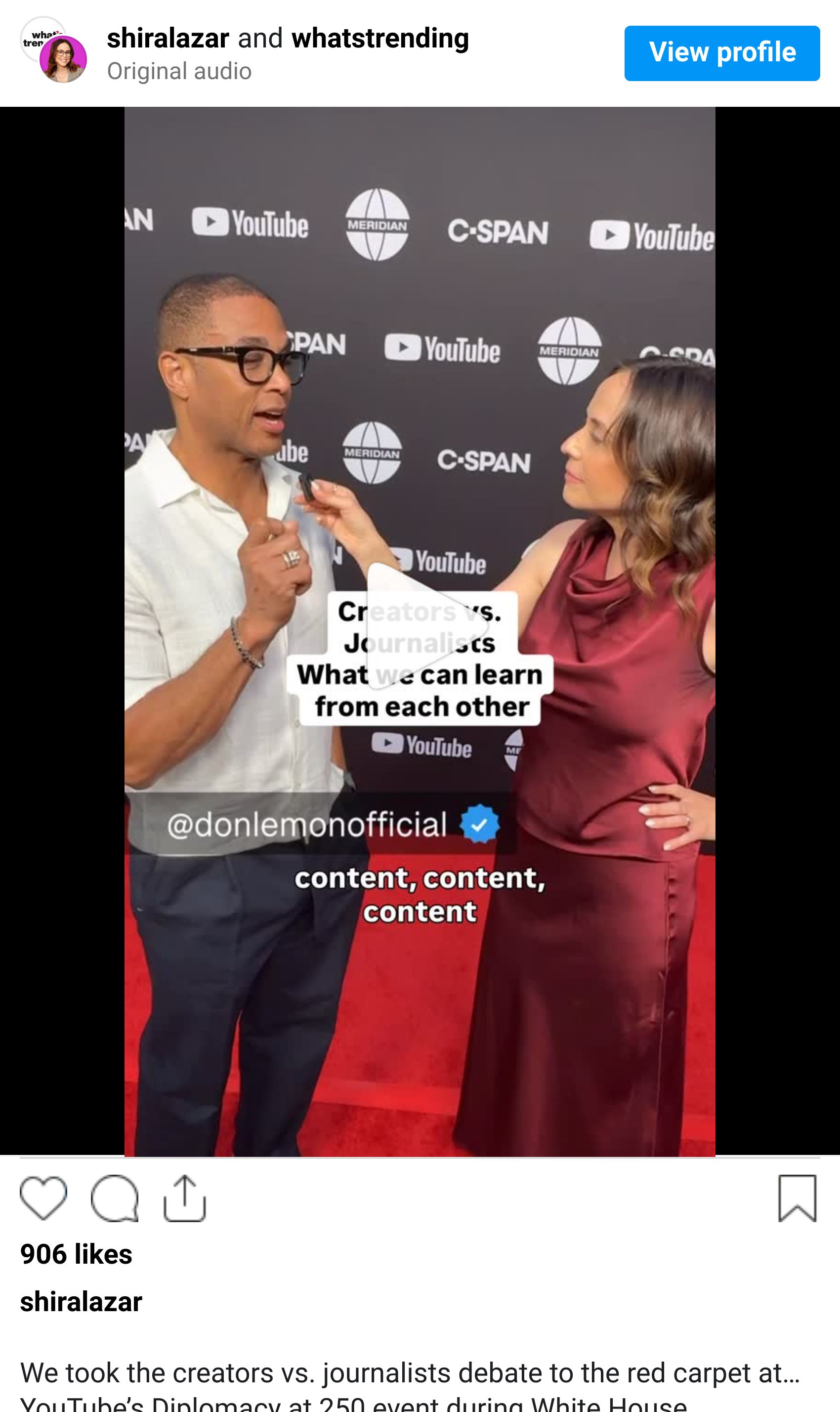
On the red carpet with MatPat and Stephanie Patrick
The Post reports Valentine's account that Executive Director Steve Thomma told her independent journalists "were not news, would never be news, and would never be invited to the dinner." Thomma denied saying that after publication.
Substack responded by starting its own party, framed on the invitation as “the alternative to the WHCA dinner.”
This year, Substack’s New Media Party returned for year two at the Renwick Gallery. This time, it wasn’t alone.
For most of the past century, the WHCA performed three functions at once. It decided who got a seat in the briefing room. It hosted the dinner that conferred social legitimacy on those reporters. And it stood, at least in theory, as a collective backstop when administrations pushed back on coverage.
This year, all three of those functions came apart in plain view.
In February 2025, the Trump administration announced that the White House press team, not the WHCA, would manage the press pool. That ended a century-old norm. At the same time, according to Pew Research, 21% of US adults began regularly getting their news from social media influencers, climbing to 37% among adults under 30.
Earlier this year, the administration invited podcasters and influencers to join traditional media in the press briefing room. But most of those creators have never set foot in a briefing room and don’t need to. They’re credentialed by their audience.
And in moments like this weekend, you could feel another shift in real time.
It wasn’t just about who had access, but who people trusted. Coverage from inside the main WHCD didn’t automatically carry more weight. In some cases, the perception of independence made voices outside of it more trusted.
This year, the White House Correspondents’ Association dinner sold out, but it also faced real competition in the days leading up to it.
YouTube hosted a few hundred guests, from creators including me, Johnny Harris and MatPat, to legacy journalists at the Meridian International for its “Democracy at 250” event with C-SPAN. The following evening, it held a reception for news and politics creators at Floreria Atlántico, alongside a growing number of creator-journalist gatherings across the weekend, according to The Washington Post.
Beehiiv (the newsletter platform I use here) made its WHCD debut, co-hosting A Celebration of Journalism with Shinola in Logan Circle. Grindr threw its first-ever WHCD weekend party at a historic $9 million Georgetown estate, quickly becoming one of the most in-demand invites after coverage from Vanity Fair. Even TMZ has officially debuted in DC with an entire team now based there, underscoring how far the definition of “political media” has expanded.
And it wasn’t just them. According to Axios, nine events this year were hosted by media startups under a decade old, including Punchbowl News, Semafor, Puck, Status, NOTUS, and Crooked Media.
Legitimacy is no longer defined by a single institution.
Platforms are starting to replace parts of the infrastructure that once belonged exclusively to newsrooms. Substack runs a program called Defender that covers up to $1 million in legal fees for creators facing defamation suits, harassment, or cease-and-desist letters from powerful entities. Beehiiv, is positioning newsletters as a serious media category, placing creator publishing in the same prestige conversations as legacy journalism.
Here’s what that means.
For creators, the infrastructure to operate as a press is now real. Five years ago, the protections that made independent journalism viable came from a masthead. Today, some of them come from a platform’s terms of service. That trade-off has costs and benefits, but it exists.
For institutional outlets, the talent pipeline runs both directions. The Washington Post's most-watched TikTok creator left and built a new outlet whose YouTube views quickly surpassed his former employer’s.
Legacy figures like Don Lemon are now making that same shift, moving outside traditional institutions and into the creator-driven media ecosystem.
The flow of prestige is no longer one-way.
I felt this shift firsthand while interviewing Jim Acosta at the YouTube event. If you had told me 15 years ago that a CNN anchor would go independent, launch his own channel and tell me I was smart to start early, I would’ve been blown away.
The dinner will be rescheduled. The redistribution underneath it will not.
In other news
In response to backlash around actress Reese Witherspoon encouraging women to learn AI, I came together with 4 other women for The Women’s AI Challenge.
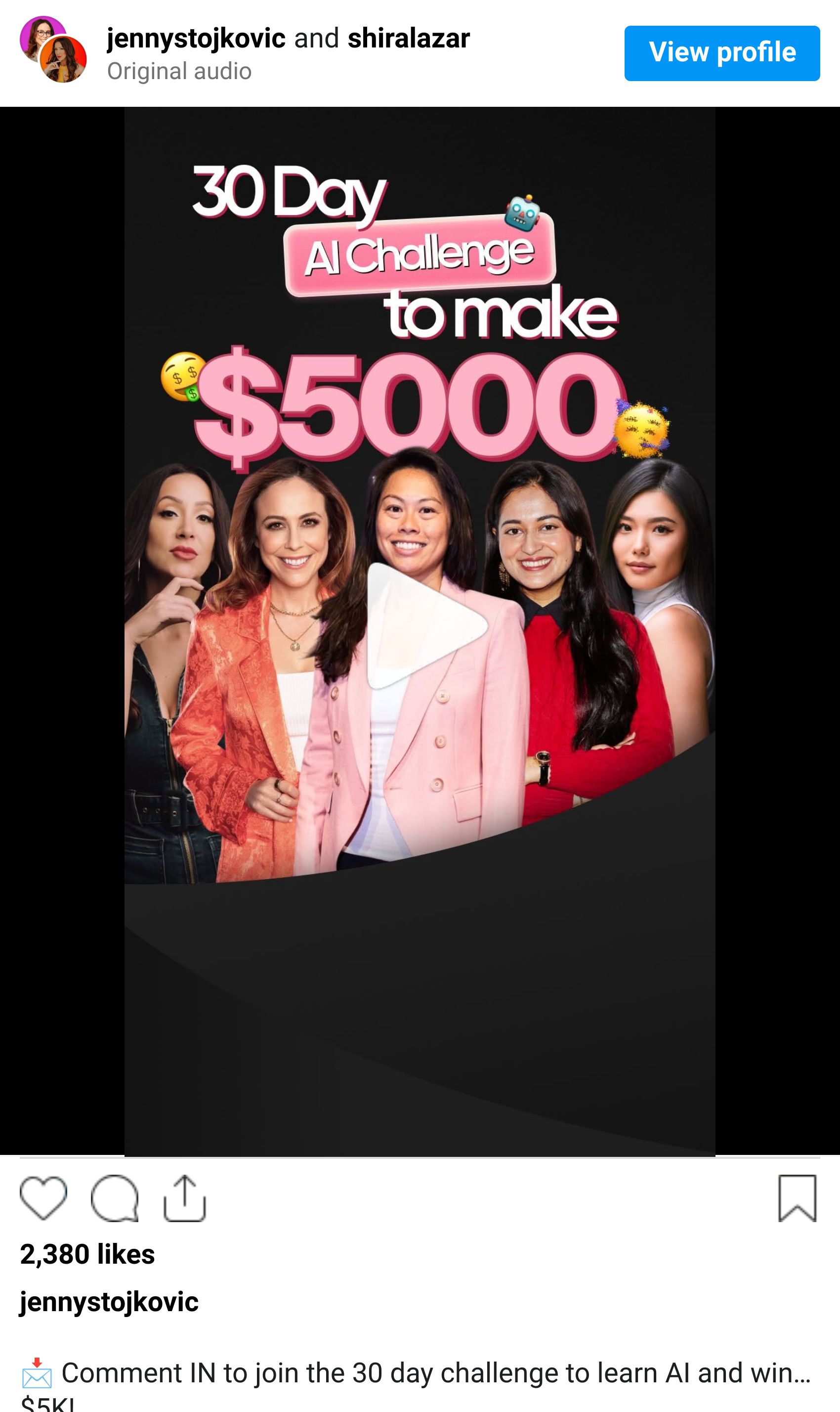
For 30 days, starting May 1st we are teaching women ways you can use AI for your work, life, finances and personal brand. It’s completely free, plus you can win 5k of prizes for completing the entire thing.
Sign up here: https://www.thewomencreators.com/womens-ai-challenge
Where to find me next…

Friday, May 1
I’m kicking off Mental Health Awareness Month with Hollywood & Mind at UTA in Los Angeles, moderating their social media forum on behalf of Creators 4 Mental Health. More info HERE
ChatGPT gives you generic answers because you give it generic prompts.

You know the fix: longer prompts, more context, clearer constraints. But typing all that takes five minutes per prompt, so you shortcut it. Every time.
Wispr Flow lets you speak your prompts instead of typing them. Talk through your thinking naturally — include context, constraints, examples — and get clean text ready to paste. No filler words. No cleanup.
Works inside ChatGPT, Claude, Cursor, Windsurf, and every other AI tool. System-level, so there's nothing to install per app. Tap and talk.
Millions of users worldwide. Teams at OpenAI, Vercel, and Clay use Flow daily. Free on Mac, Windows, and iPhone.
Other headlines to check out:
AI
Creator Economy
Web3
Friendly Reminder
If you can see where things are going, don’t wait for permission to act on it.
Remember, I'm Bullish on you! With gratitude,

Stop Drowning In AI Information Overload

Your inbox is flooded with newsletters. Your feed is chaos. Somewhere in that noise are the insights that could transform your work—but who has time to find them?
The Deep View solves this. We read everything, analyze what matters, and deliver only the intelligence you need. No duplicate stories, no filler content, no wasted time. Just the essential AI developments that impact your industry, explained clearly and concisely.
Replace hours of scattered reading with five focused minutes. While others scramble to keep up, you'll stay ahead of developments that matter. 600,000+ professionals at top companies have already made this switch.
