

When Evan Shapiro (Media Cartographer and longtime friend) and I unveiled the Affinity 100 at IBC and The Hollywood Reporter published the exclusive, my phone started lighting up.

Creators were genuinely freaking out. Some had never imagined they would appear on a major industry list, let alone rank above names like MrBeast. For many, it was the first time they felt the depth of what they had built was being recognized, not just the size of their following.
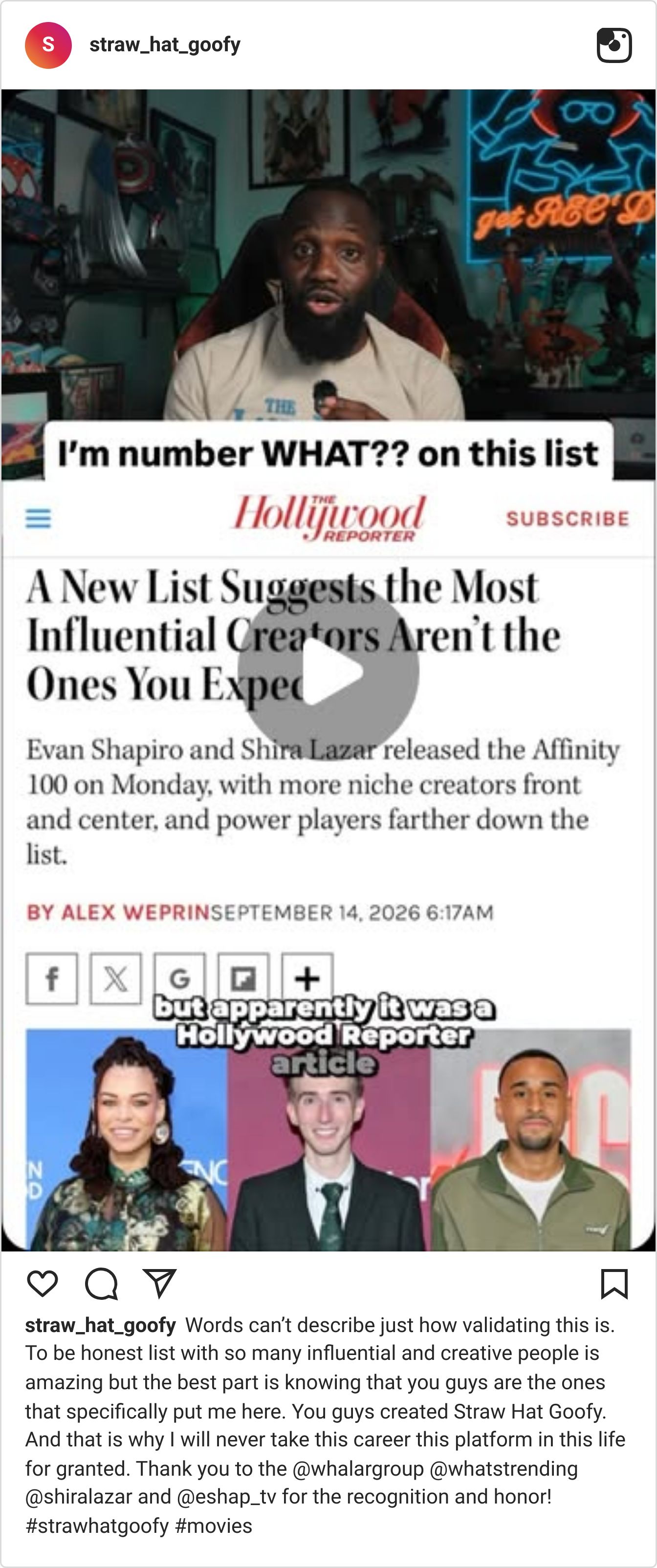
Watching those reactions made it clear why we needed this list.
For too long, follower count has been shorthand for everything: value, influence, rate card, even whether someone gets the meeting. But it often misses the thing that actually makes a creator powerful: the relationship they have with their audience.
The Affinity 100 was created to measure that relationship and what follower count misses.

Blair Imani is No. 1. MrBeast is No. 85. That is not the whole story. The pattern underneath those rankings is much more interesting.
The Inaugural Affinity List was created in partnership with Whalar Group and its data platform, Foam, as a companion to last year's Creator Ecosphere Map. The map showed the shape of the industry. This list asks a more specific question: Who are people actually showing up for?
Blair Imani, B. Dylan Hollis, Ash Baber, De'arra Taylor, Chris "Speedy Morman" Morman, Eric "Rico Taquito" Sedeño, DeMarcus Shawn, Tineke Younger, Jackie Aina and Quenlin Blackwell.
Look at that group: an educator and historian, a creator baking vintage recipes that should never have existed, a beauty veteran who spent a decade pushing the industry to answer for its shade ranges, and voices spanning comedy, food, fashion and culture.
No two are doing the same thing. They did not build affinity by chasing a format that was already working for someone else. They built it by having something specific to say and a particular community that wanted to hear it.
That diversity matters. The list doesn’t simply reward one type of creator, subject or audience. It reflects how influence now moves through many different identities, communities and areas of expertise.
The expert creator is rising
The middle of the list may be the most revealing.
Golloria sits at No. 12. She tests the darkest shades in major beauty launches, speaking directly to an audience the industry has underserved for decades. That isn’t niche content. It addresses an unmet need.
Amelia Dimoldenberg is No. 48. She turned awkwardness into a format so recognizable that Chicken Shop Date has become a genre other people try to copy.
Dr. Judith Joseph lands at No. 67, bringing clinical expertise to mental health content. As the founder of Creators 4 Mental Health, watching that kind of knowledge build a real audience means a lot to me.
These creators may not all be household names in the way MrBeast is. But they have become irreplaceable to the people who follow them. That kind of trust is its own form of scale.
Reach isn't affinity
Druski is No. 53. MrBeast is No. 85. Dude Perfect is No. 89. Mark Rober is No. 90.
Those rankings do not diminish what they’ve built. These creators have become media companies, with studios, shows, products and teams. Their reach and business value are extraordinary.
The data points to a different distinction. Blair Imani's Affinity Quotient is 100. Druski's is 53.7. MrBeast's is 35.7. The scores compare creators with others on their own platforms, so this is not a measure of who reaches the most people. MrBeast clearly does.
It is a measure of the relationship underneath that reach.
As a creator scales into a full media operation, audiences may begin showing up for the show, format or universe as much as for the individual. That is a different bond from waiting for someone's next post simply because it’s theirs. Neither is inherently better. They are simply different products, and the industry should start pricing them with an understanding of that nuance.
The methodology, briefly
The Affinity Quotient analyzes public likes, comments, shares and views across Instagram, TikTok and YouTube over a 30-day window. Shares are weighted twice because sharing is one of the clearest observable signals of trust: someone is willing to put your content in front of their own community.

To qualify, a creator had to rank among the top 50 by followers on a platform and appear on a major industry list or receive a major award within the past year. Followers still open the door. They just do not decide what happens once you are inside.
Is the system perfect? No. It is a 30-day snapshot, not a census. It measures observable response, not sales, trust or every form of cultural impact. But it surfaces something follower count has always hidden: the depth of the relationship.
What to do with this
If you are a creator, your specificity is the asset. The thing you were told was too narrow, too weird or too personal may be the very thing people are attached and attracted to.
If you are on the brand side, the better question is not simply how large someone's following is. It is what kind of influence you need. Do you want reach, or do you need people to move?
Evan wrote his own deep dive into the data and what it signals about the future of media. He approaches it as a cartographer, mapping the systems. I come at it from 20 years of being a creator, sitting with my peers and watching what the numbers miss.
Read both. Then look at the list and tell us what surprised you.
Other headlines to check out:
AI
Creator Economy
The Affinity 100: The Most Impactful Creators of 2026: the full list and methodology behind today's newsletter.
Inside Good Good's Callaway ad crisis that cost the company its top 2 execs and a string of partners: a cautionary tale on what happens when a brand partnership goes sideways publicly.
Web3/Crypto
“If your dream only includes you, it's too small.”
Remember, I'm Bullish on you! With gratitude,
